




We were early in our call on the yen. For three years we argued the currency was far too cheap, and for three years the market disagreed - pushing it to levels not seen in four decades. This summer brought the first real sign of a turn: a sharp reversal, with a joint intervention and rising rates. We will hold off on the victory lap — a stopped clock is right twice a day.
On paper it does not stack up. Japan runs a current-account surplus and is the world’s largest creditor nation. Corporations are awash with cash; there is a huge individual savings pool, and thirty-year paper yields close to 4%. It is very hard to see why the currency has been so weak.
The fashionable explanation is fiscal: Japan’s debt is enormous; therefore the currency must be weak. We do not buy it. Strip out intra-government holdings and net debt is closer to 80-100% of GDP. The debt story does not explain a currency at forty-year lows.
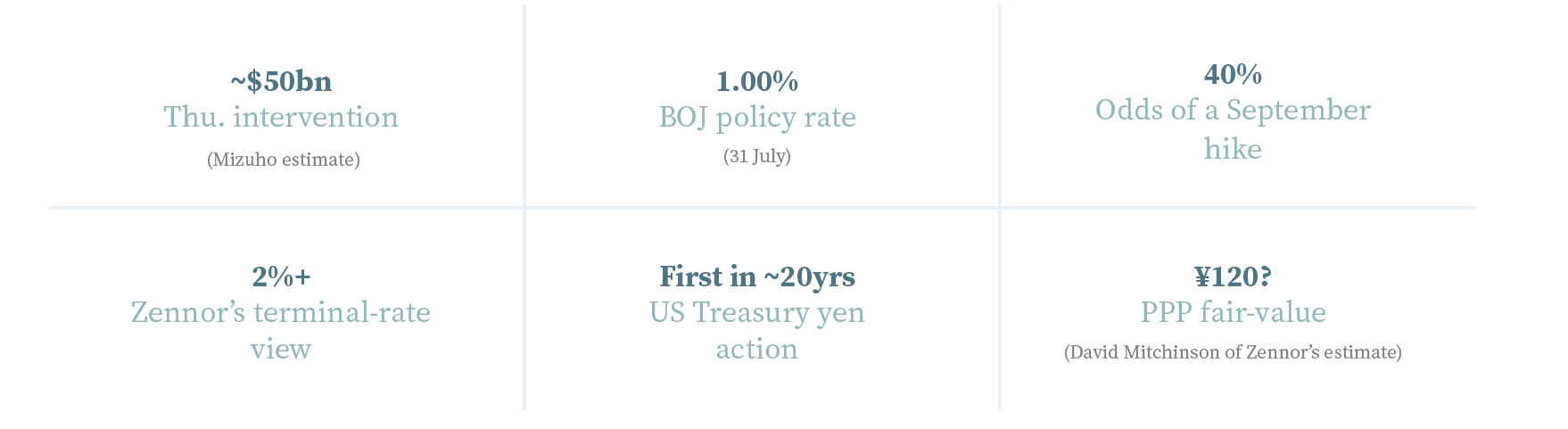
David suggested to me some time ago that purchasing power parity might be close to ¥120/$1. I am not that optimistic. But I have been here before, many times. When the yen finally turns, the domestic institutions bring their money home, the carry trades close, and the rally is enormous. I saw that in 1998 and in August 2024. That will be this time too. It could prove a major inflection point for markets.
The Episode at a Glance
The Intervention
The pressure is already showing. Cheap yen funding has fuelled the technology rally right across Asia, not just in Tokyo. In Korea, a quarter of the population has been playing the same trade. As the yen strengthened, margin calls in both Japan and Korea have been extreme. On Thursday the Japanese clearly intervened in the currency market. Towards the end of Friday’s trading, the US Treasury acted - we think in concert with the Japanese Ministry of Finance.
Scott Bessent has been a yen bull for a while and enjoys a close relationship with Bank of Japan (BOJ) governor Mr Ueda. Japan’s Vice-Finance Minister, Atsushi Mimura, noted: “We have received support from the US authorities that goes beyond mere moral support. We have been in constant contact with them.”
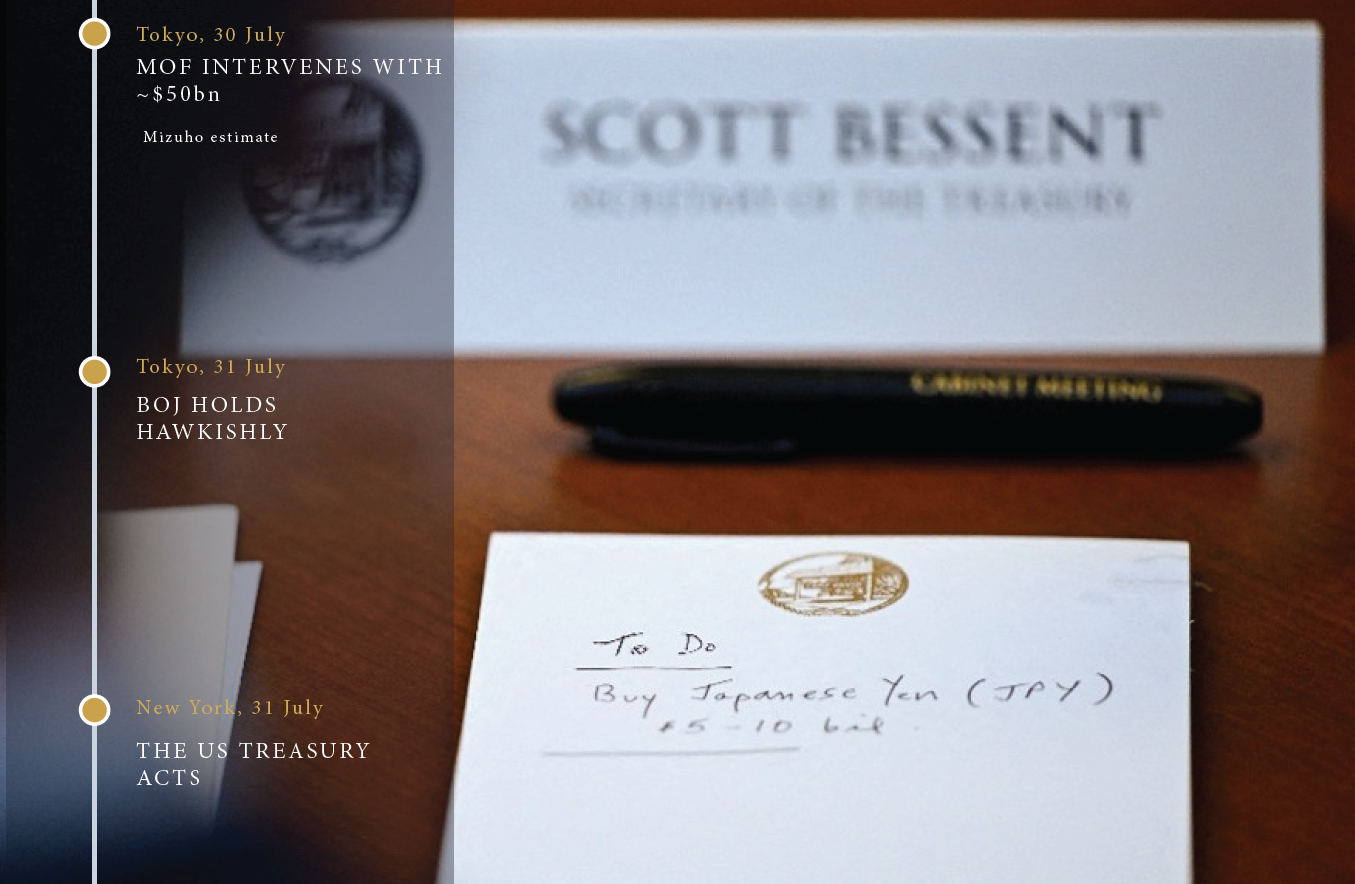
A notepad in front of U.S. Secretary of the Treasury Scott Bessent reads "To Do Buy Japanese Yen $5-10 bil" as he participates in a cabinet meeting at Camp David, Maryland, U.S., July 31, 2026. The note, photographed at 11:33 EDT, came after Reuters earlier reported the Treasury had put banks on alert for a possible U.S. intervention in the market for Japan's currency. REUTERS/Daniel Heuer
What makes this episode different
In April 2026, Japan used up $60bn propping up the yen but the Ministry of Finance (MOF) was acting alone, and the market knew it. This time the US has clearly recognised that Japan cannot fight the market by itself. The Federal Reserve Bank of New York sold euros and bought yen on behalf of the Treasury. The first US intervention in two decades.
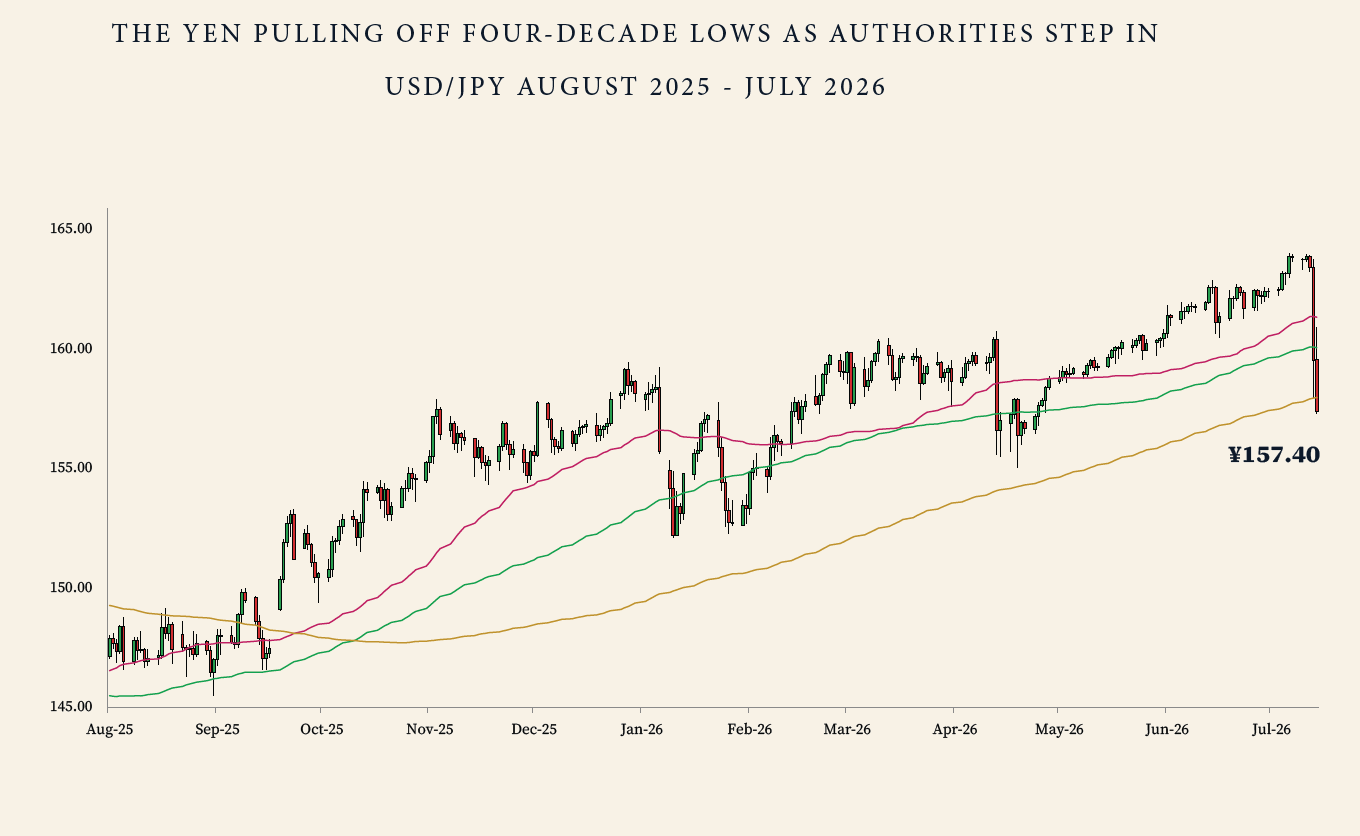
Source: Bloomberg, data to 31 July 2026
The Bank of Japan: Hawkish Undertones
On Friday the BOJ held interest rates at 1%, with Mr Ueda saying the central bank must not “fall behind the curve”. Core inflation is already at the 2% target, and he sees the risk as inflation surprising to the upside. The market puts the chance of a September hike at 40%.
Our View
We think the BOJ is already behind the curve. With a strong oil price, a weak yen, and rising wages from a super-tight labour market, there is every chance the terminal rate is not 1.5% but even greater than 2%. The press briefing was hawkish. Mizuho Financial Group estimates Thursday’s intervention was close to $50bn. The US stands ready to act again. Cheap yen funding and asset bubbles have been all too easy; a shakeout could easily transpire, and it may be the catalyst for significant repatriation.
It is the unwind of this yen carry trade that worries us at Zennor. It worries Mr Bessent too. We cited it as a “Black Swan” event for world markets at the beginning of the year (we are a cheerful duo!).
What are we doing about it?
Very little. Your portfolio is already positioned for this. The AI trade and the Nikkei are, in effect, an inverse yen trade, financed with cheap yen. When the yen moves, the most geared plays on offshore earnings and US semiconductor capex will correct the most and the boring, cash-rich companies that we own will get their turn.