




February was characterised by very high geopolitical uncertainty and market volatility; tensions built in the Middle East, the US Supreme Court ruled Trump’s liberation day tariffs illegal, and nerves around AI disruption risk rippled through the market sector-by-sector. IFSL Evenlode Income[i] rose +4.0%, compared to a rise of +3.9% for the IA UK All Companies sector and +6.5% for the FTSE All-Share. The UK market’s strength was helped by another strong month for commodity stocks which, along with financials, have become a large part of the index over the last two years. This took the year-to-date return to +2.4% for IFSL Evenlode Income compared to +6.6% for the IA All Companies sector and +9.7% for the FTSE All-Share.
In early March, stock markets have fallen as oil prices spiked due to the closing of the Strait of Hormuz.
Is quality investing dead?
A few articles have appeared over recent weeks in the financial press, entitled ‘is quality investing dead?’ or something similar. The contrarian in me is reminded of similar articles from the late 2010s and 2020, entitled ‘is value investing dead?’. My father is a dyed-in-the-wool value investor, and I remember his pain at the time. Over the last five years, and particularly over the last eighteen months, it has been the turn of quality investors to feel the pain of relative underperformance.
Arguments against any asset class or investment approach always have a truer ring to them following a period of prolonged relative underperformance. The key argument currently deployed against quality stocks is that high-return, competitively advantaged companies are ‘long duration’ assets. In other words, their earnings and cash flows are more highly rated by investors because there is an expectation that their cash flows will continue long into the future, thanks to the strength of their franchises and their long-term growth opportunities.
The critique then goes on to suggest that these long duration companies shouldn’t be valued as highly anymore, for two main reasons:
- Interest rates are higher than they were five years ago, and therefore the opportunity cost of waiting for those longer-term earnings to come through is now higher.
- We are in a world of rapid technological change and so, in theory at least, even the best businesses are prone to disruption risk. Everything is more uncertain.
Long duration no longer
What I find striking is how far this narrative has now been taken, in terms of the extent to which it has embedded itself in relative valuations.
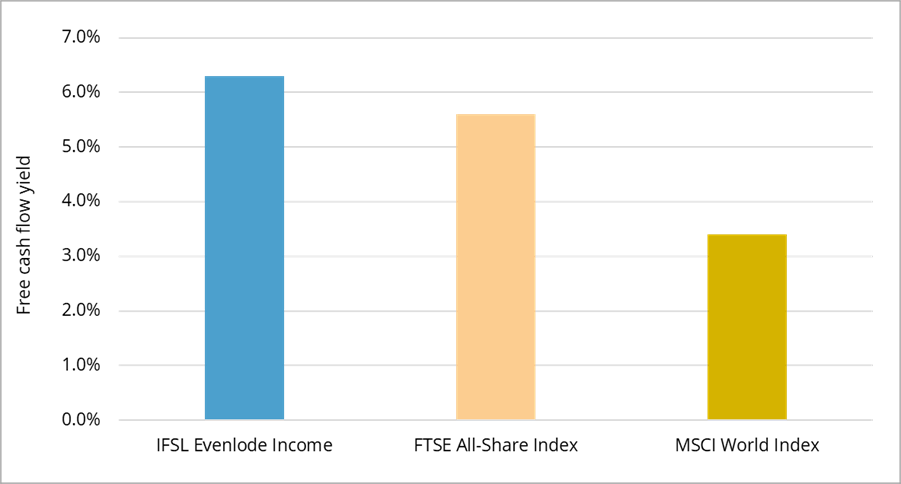
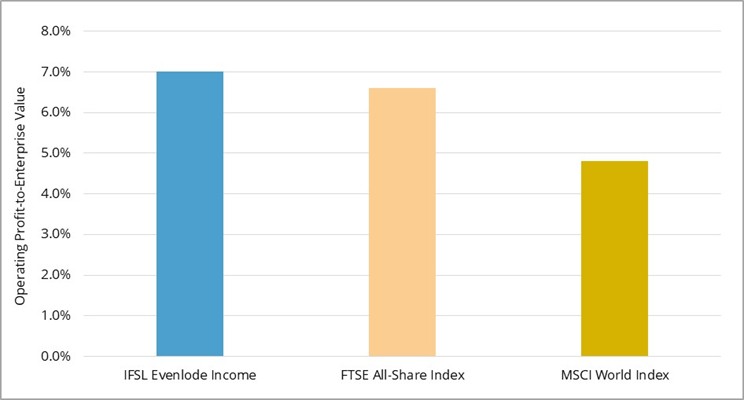
The holdings in the IFSL Evenlode Income portfolio – growing companies that possess durable competitive advantages and deliver high returns on capital – are back to valuation levels we remember from the 2009-11 period in absolute terms. They are also currently cheaper on aggregate than the UK market, and very substantially cheaper than the global stock-market. Below is IFSL Evenlode Income’s valuation on a last-twelve-month free cash flow and earnings basis – versus both the UK and the global market. In summary, these companies are being given no credit for their competitive advantages, highly cash generative characteristics and low-leverage business models.
Free cash flow yield[ii]
Earnings yield[iii]
HALO
There is also a sentiment doing the rounds that high-return, asset-light businesses are more prone to disruption than asset-intensive businesses, in the current era. This theme is represented by the acronym HALO (heavy assets, low obsolescence[iv]). Part of the argument here is that high-return, asset-light businesses are often digital in nature, and therefore may be more at risk from technological disruption. I agree with this argument up to a point, though I’m strongly of the view that the best placed digital companies can harness AI technology, remain in good health, and continue to grow at good rates. A companion argument in favour of HALO companies is that there is likely to be more investment over coming years in physical areas of the economy, such as energy security and efficiency, and national infrastructure renewal.
On this point many asset-light, high Return on Capital Employed[v] (ROCE) companies do own and sell plenty of assets and physical products. Pictured below are manufacturing facilities at IFSL Evenlode Income holdings Rotork, Weir Group and Howden Joinery. They are in the business of making and selling physical things, but they generate very attractive ROCEs - of +38%, 18% and 19% respectively - thanks to the strength of their competitive positions. The high ROCE is generated by a variety of factors that define their strong franchises including brand strength, product and service quality, entrenched distribution networks, R&D expertise, and the mission-critical nature of their products versus the low percentage of customer budgets they represent.
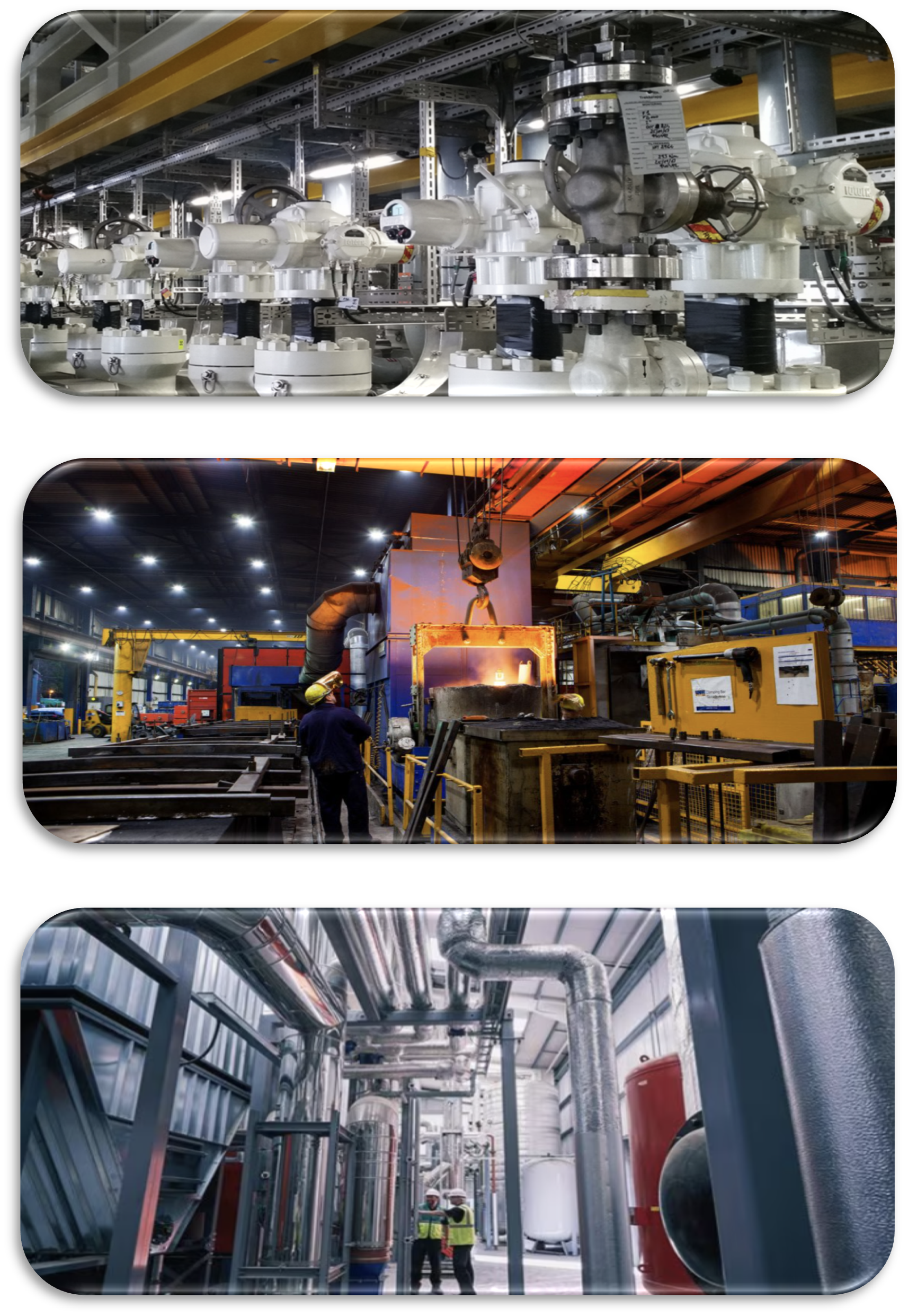
Investment in national economies will be crucial in the coming years with the goal of driving better growth and resilience. Structural trends include the need for investment in digitalisation and automation, research and development, health care, upgraded infrastructure and industrial facilities, and improved energy efficiency and security. Many portfolio companies are well placed to meet these needs.
Competitively advantaged companies are not dead
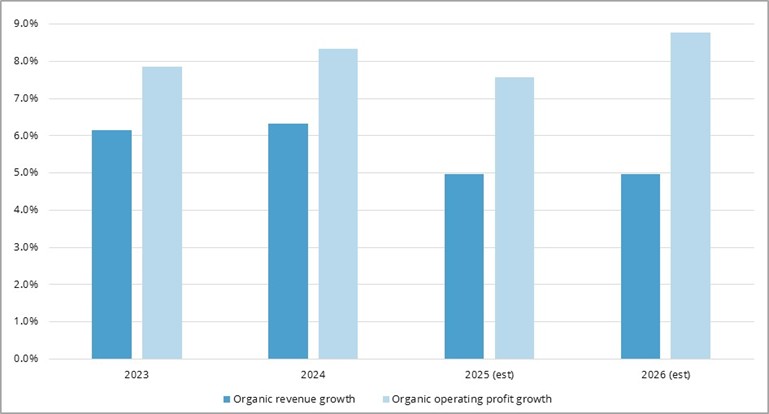
This leads back to the actual companies we invest in. Though share prices and valuations are highly depressed for many holdings, and the world is clearly not without significant complexities, the portfolio continues to grow at a good rate whilst spinning off very large amounts of free cash flow. Below is the recent organic revenue[vi] and profit growth for the portfolio and the current forecast for 2026, and I will discuss recent results in next month’s investment view in more detail.
2023 – 2026: Revenue and profit growth
Companies eating themselves
As discussed above, even after making significant operating and capital investments in their businesses, portfolio holdings are generating plenty of excess free cash flow, which leaves room for share buy-backs as well. Returning to the digital-orientated holdings RELX, Experian, LSEG and Sage grew organic revenue at +7%, +8%, +7% and +10% during their latest respective reporting periods, and free cash flow generation was strong. Since the start of the year, each company has announced a buy-back programme representing approximately 7%, 6%, 4% and 3% of shares in issue respectively, to be completed by the end of 2026. This significant de-equitisation is highly accretive to owner earnings[vii].
As investors in UK quality companies, we are the first to acknowledge that we have been fishing in a deeply unfashionable pool of the global stock market over the last few years, but this has created a valuation opportunity that is commensurately compelling.
Hugh, Chris M., Ben P., Charlotte, Leon and the Evenlode team
16 March 2026