




9 defence themes on our watchlist following the US–Iran breakthrough
Less than 90 minutes before President Trump's deadline for massive strikes on Iran's civilian infrastructure, a diplomatic breakthrough was reached. A 14-day ceasefire entered into force after Pakistan's Prime Minister Shehbaz Sharif presented a revised 10-point proposal from Tehran. The White House deemed it “a workable basis” for negotiations.
Under the terms, Iran will allow civilian shipping through the Strait of Hormuz under Iranian military supervision, and all attacks are paused. The next round of talks is scheduled for Islamabad on April 10. Oil prices fell immediately and stock markets surged. The battle over the narrative is already underway: Washington claims that military objectives have been achieved, while Tehran describes the ceasefire as a victory.
“I have been following this conflict closely since the US and Israel launched their strikes 39 days ago. Beyond the geopolitical dimensions, which are obviously critical, what we are seeing in Iran reinforces several military trends that were already apparent but are now accelerating.”
Karl Engelbrektson, Member of the Finserve Global Security Fund advisory board and former Commander of the Swedish Army
1. The ceasefire is fragile
Iran's Supreme National Security Council has approved the ceasefire but stressed that it does not constitute a permanent end to the war. Overnight into Wednesday, missile alerts were triggered in both Israel and the United Arab Emirates, and it remains unclear whether individual commanders in the Islamic Revolutionary Guard Corps (IRGC) have stopped firing. Prime Minister Benjamin Netanyahu's government supports the ceasefire but maintains that it does not cover the fighting against Hezbollah in Lebanon, where Israel is continuing its operations.
2. The nuclear question remains unresolved, and the debate is spreading to new countries
Rafael Grossi, Director General of the International Atomic Energy Agency (IAEA), has warned that a nuclear-armed Iran could trigger wider proliferation. At the same time, the debate has resurfaced in countries that have not discussed domestic nuclear capabilities for decades. The UK-based think tank Chatham House points to Japan and South Korea, where the issue is driven by China's military buildup and uncertainty over US security guarantees. Even in Sweden, a low-intensity debate on nuclear weapons is underway.
3. Stockpiles and production: modern air defence exposes a brutal cost curve
“You cannot shoot down drones that cost tens of thousands of dollars with missiles that cost millions. The math does not work. Do that and you drain your stockpiles in days,” says Karl Engelbrektson.
The numbers confirm this. According to CSIS, Arab countries using American systems may have expended around 800 PAC-3 and THAAD interceptors, the most advanced US air defence missiles, in just the first five days of the war. Patriot stocks were already down to a quarter of target levels before the conflict began. Pentagon contracts with Lockheed Martin will triple Patriot missile production and quadruple THAAD output, but the ramp-up will take years. New challenges are emerging as Europe can no longer rely on the US for air defence missiles.
“The investments required are extremely high and span long time horizons. Joint procurement through various alliances, including beyond Europe, will be necessary,” says Joakim Agerback, lead portfolio manager of Finserve Global Security Fund.
Switzerland is considering the Franco-Italian SAMP/T system, Europe's only indigenous alternative to Patriot, after the US postponed Patriot deliveries. Denmark chose SAMP/T over Patriot last year, citing shorter delivery timelines. MBDA, Europe's largest missile manufacturer, plans to double its production and has raised its investment plan to €5 billion.
4. Gulf states' willingness to invest is being tested
An uncertain ceasefire may push the Gulf states to deepen their ties with the US, but they could also reassess the relationship. During the war, Iranian missiles and drones struck airports, ports and desalination plants across several Gulf states. Saudi Arabia responded by signing a defence agreement with nuclear-armed Pakistan. The question is whether the region can defend itself without being dependent on the US, and whether major tech companies will continue to invest billions in data centres in a zone within reach of Iranian weapons.
5. The EU and the US are drifting apart
Donald Trump launched the strikes on Iran without consulting either Congress or European leaders and has since expressed frustration that allies are not shouldering the consequences. Trust in the US among German citizens has fallen to 15%, the lowest level in two decades. Suggestions that the US might leave NATO have not been acted on, but NATO Secretary General Mark Rutte is currently traveling to Washington for talks.
“We can no longer assume that the US will provide capabilities that we can freely use. Significant investments are needed to build our own capacity and reduce dependency,” says Joakim Agerback.
6. The rules-based international order is under strain
Pierre Vimont of the think tank Carnegie Europe observes that the EU has been reduced to a passive commentator. Constanze Stelzenmüller at the Brookings Institution describes it as Europe watching its relationships with Russia, China and the US deteriorate simultaneously, while the Middle East risks pulling them into an ”uncontrolled fire.”
Karl Engelbrektson sees a serious shift in warfare:
“What concerns me most is that war is becoming more total. Civilian and military targets are being linked not just politically but in terms of actual targeting. Power grids, bridges, water treatment plants. War is always an extension of politics, but the line between civilian and military is blurring in a way we have not seen for a very long time.”
7. Ukraine's pendulum swings back
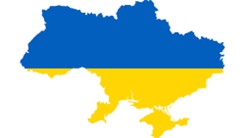
Ukrainian President Volodymyr Zelenskyy has warned that Patriot deliveries to his country risk shrinking. According to the think tank GLOBSEC, more Patriot missiles were fired at Iranian targets in the opening days of the war than Ukraine has used against Russia in four years. However, Ukraine has positioned itself as a strategic partner in the Middle East through its drone expertise, signing ten-year defence agreements with Saudi Arabia and Qatar, among others.
8. Small and mid-sized states are charting new courses
Pakistan has gone from being an international outcast to serving as a mediator. Ukraine is selling drone expertise. Denmark and Switzerland are seeking European defence alternatives. The pattern is clear: small and mid-sized states are diversifying their security relationships, seeking multiple suppliers and building new alliances in a world where predictability no longer holds.
Joakim Agerback sees investment opportunities in this shift: ”We try to identify which parts of the value chain benefit most from the ongoing rearmament. We focus on companies with strong market positions and good chances of winning contracts where investments are the largest.”
9. The outcome of peace talks will define 2026
The next fourteen days will determine whether 2026 is remembered as the year of a major Middle Eastern war or the year of a historic peace agreement. Iran does not want to end up in a situation like Gaza, where a ceasefire exists on paper, but new strikes can resume at any time. The defence sector is showing strong momentum, with healthy order intake, growing order books and broad demand across Europe, the US and globally. Saab's order intake reached SEK 168.5 billion for the full year 2025, and Kongsberg Gruppen's order book grew by 57% year on year.
Karl Engelbrektson reminds us that technology is not everything, and that Sweden has lessons to draw: ”Electronic warfare has become central and air defence is growing increasingly complex. And regardless of technological development, a country's size and terrain remain decisive for what its armed forces can achieve. Iran is a large country with difficult terrain, and that limits what air power alone can accomplish. It is a reminder that is equally relevant for those planning the defence of Sweden.”
Finserve Global Security Fund has been analyzing geopolitics and defence since 2019, supported by an advisory board with deep and long-standing expertise in defence and security policy.